Can You Nail a Seamless Emerald to Aqua Nail Ombre?
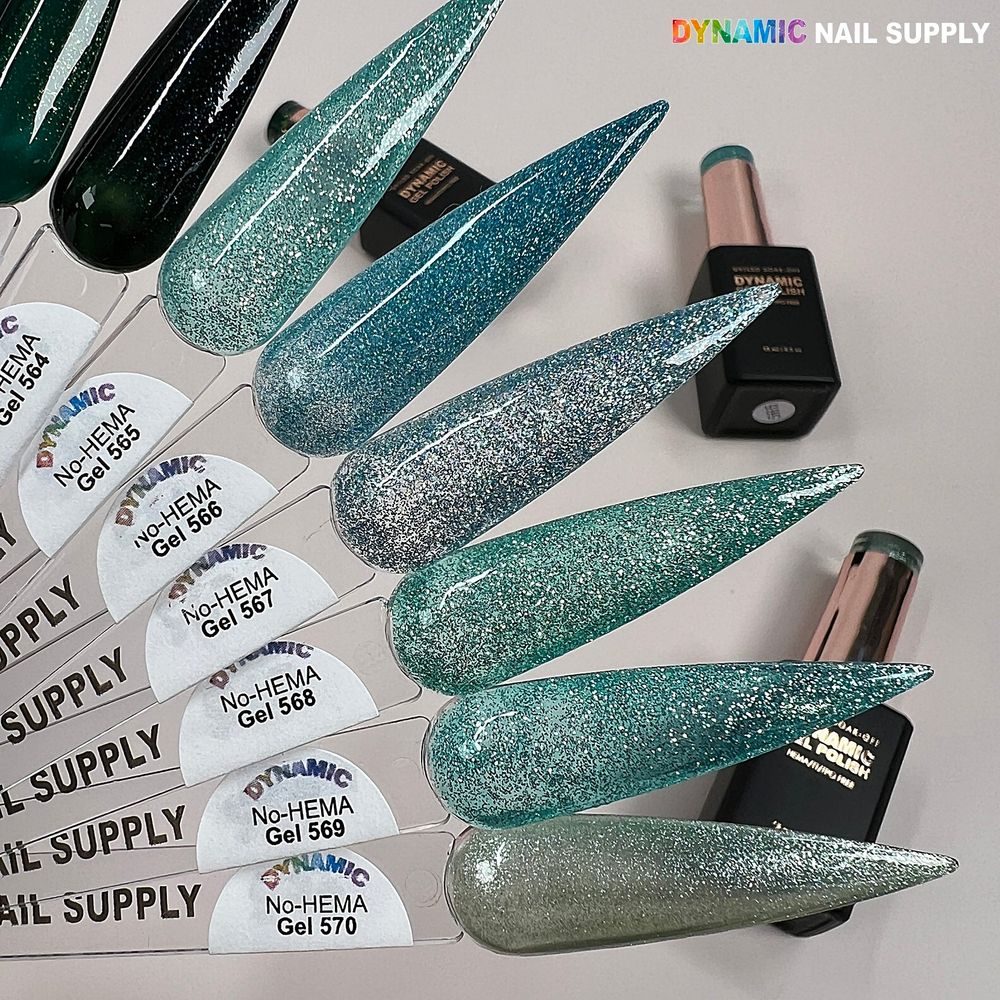
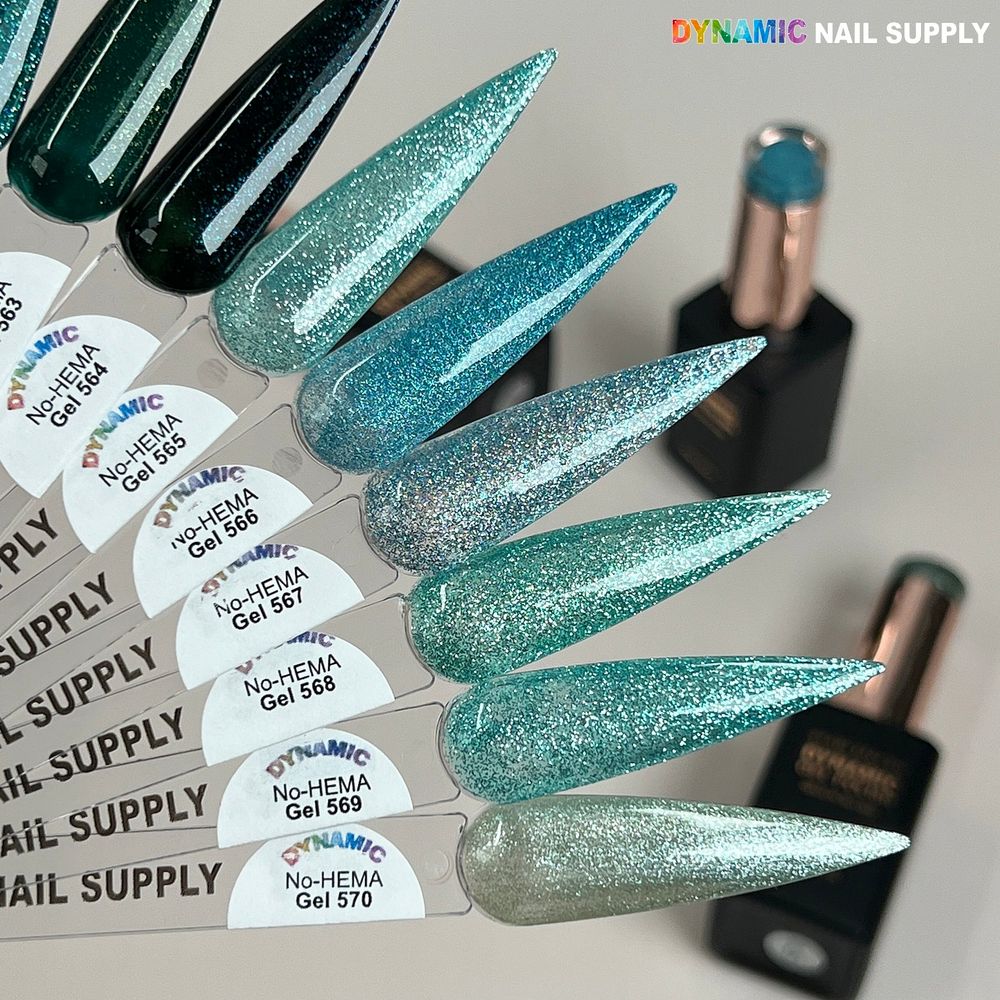
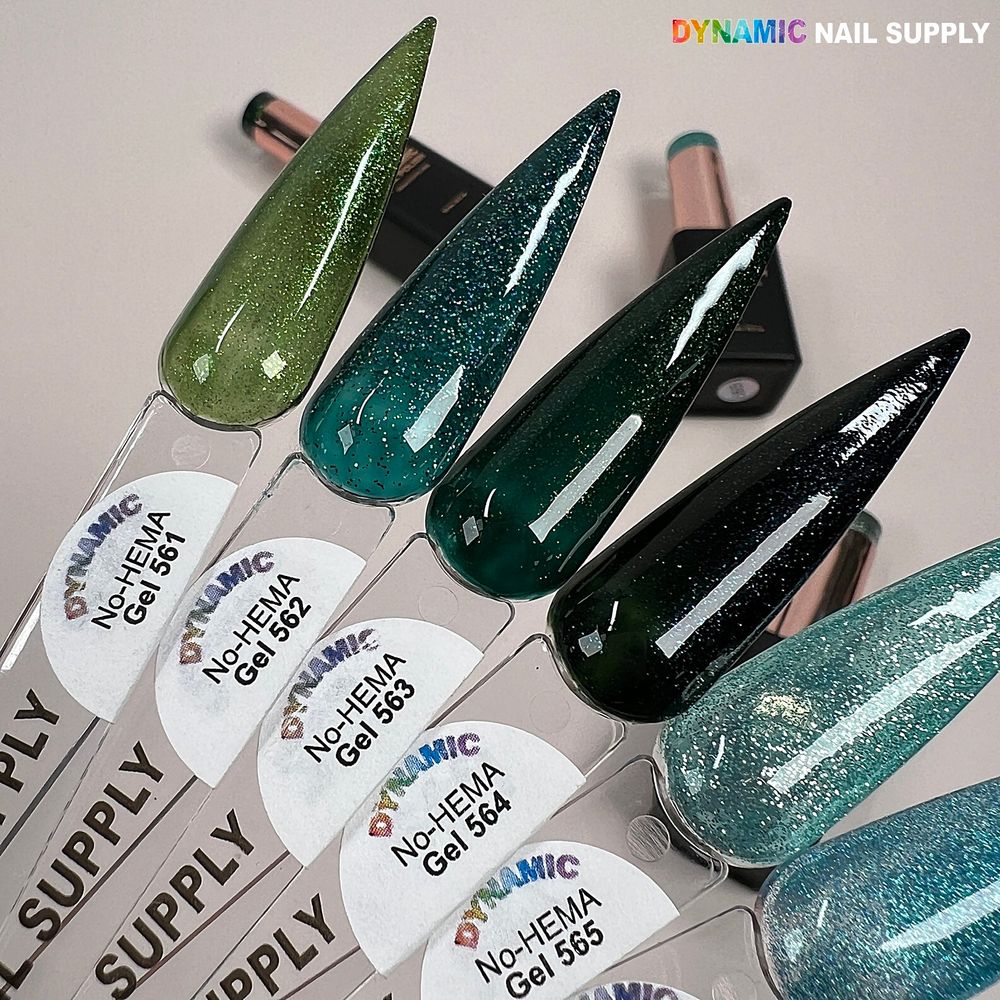
A salon-ready myth vs fact on blending deep emerald into icy aqua using the Dynamic No-HEMA gel polish fan 561–570.
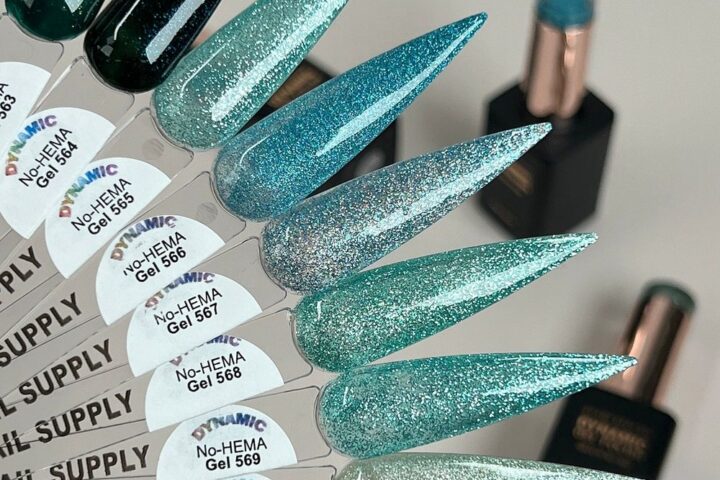
Introduction: Mobile nail techs will learn which common misconceptions slow down a perfect mermaid ombré and the facts that keep the blend streak-free. This piece focuses on a ten-shade green-to-teal fan (No-HEMA Gel 561–570) with fine micro-glitter and gloss, showing a salon-efficient workflow and what really matters to get a durable emerald to aqua nail ombre.
1. Myth: HEMA-free means weaker wear — Fact: formulation matters
Myth: Some assume HEMA-free gels can’t match traditional formulas for durability. Fact: the No-HEMA Gel 561–570 set is presented as a HEMA-free gel polish designed to deliver durable wear with no chipping or cracking when applied correctly. For mobile techs that means prepping the nail, using thin controlled layers, and curing for the lamp-specified 60–120 seconds. When technique and cure times are consistent, HEMA-free performance can hold up like other salon gels.
2. Myth: Sparkle shades always show brushstrokes — Fact: micro-glitter + layering strategy hides streaks
Myth: Glitter or shimmer automatically creates banding and visible strokes. Fact: the fan of shades here shares a consistent fine micro-glitter texture and glossy finish across the ten swatches, which actually helps soften overlap lines when you use a two-pass blending method. Start with thin, sheer layers of grass green and deep emerald; tap-blend the midpoint colors (teal blue, turquoise) with a soft flat brush or sponge; then finish with the lighter silvery aqua and icy blues to mask transitions. Keep each layer cured to avoid dragging that creates streaks.
3. Myth: You need many different brands to get contrast — Fact: this ten-shade set covers the whole tonal run
Myth: To get a true mermaid ombré you must mix brands or textures for contrast. Fact: this palette already spans true greens to blue-greens and silvery aqua tones, from grass-green shimmer through deep emerald to pale silvery green iridescent and icy aqua sparkle. Use the darkest near-black green for depth at the base, the mid-greens and teals for the fade, and the silvery aqua for highlights and tips. Because the finishes are consistent, they layer predictably and photograph with luminous cohesion.
4. Myth: Strong pigmentation equals harder blending — Fact: opacity control is the secret
Myth: Highly pigmented gels make soft gradients impossible. Fact: the No-HEMA formulas are described as highly pigmented but workable. The salon trick is to control opacity: thin first coats, map the fade (decide where emerald ends and aqua begins), then build opacity in the darkest and lightest zones only. A two-pass plan—initial thin gradient to map color, cure, then a second pass to intensify—keeps edges soft while letting pigment do the heavy lifting where it should.
5. Myth: Dark-to-light ombrés always look muddy — Fact: include a silvery anchor for clarity
Myth: Blending deep emerald into pale aqua will desaturate the colors and produce a muddy midtone. Fact: this palette includes very light silvery tones and icy blue-greens that read luminous. Use the pale silvery green iridescent or silvery aqua metallic as a top-layer highlight or thin veil over the midpoint to lift the saturation. Strategic placement of these light, slightly metallic shades keeps the gradient crisp and mermaid-bright.
6. Myth: The darkest shade must be at the free edge — Fact: base anchoring improves depth
Myth: Placing the dark near-black green only at tips gives the same depth as anchoring at the base. Fact: for a richer mermaid ombré, place deep emerald at the cuticle or nail root for shadow, then fade outward into grass green and aqua. This reverse depth technique looks especially good on photos and on natural nails: the hand reads deeper and nails appear longer when the shadow sits near the base.
7. Myth: All No-HEMA 561–570 shades are interchangeable — Fact: plan shade roles first
Myth: You can randomly swap shades and still get a salon-ready fade. Fact: the fan’s specific finishes and tones matter. Plan roles for each of the ten shades: deep emerald for base shadow, grass green shimmer for midtone life, teal blue and turquoise for the core blend, pale aqua and silvery tones for highlights and tip glow. Label swatches in your kit so you can reproduce the same flow quickly on the go.
8. Special attention: No-HEMA Gel 561
No-HEMA Gel 561 reads as the grass green with shimmer in the fan. Use 561 as the lively midtone that connects the deep emeralds to the pale aqua highlights. It’s ideal for the central blend area and for creating a fresh, verdant bridge in a mermaid ombré.
Quick specs
- Product: Dynamic No-HEMA Gel Polish – Color 561–570 (ten options)
- Bottle size: 15ml
- Finish: fine micro-glitter / shimmer, high gloss
- Curing: 60–120 seconds under UV/LED lamp
- Price point: $8 per shade (price may change)
9. Finish and safety notes
Finish with a glossy topcoat to lock in the sparkle and cure fully. For mobile service safety, avoid prolonged skin contact, clean spills promptly, and keep bottles capped when not in use. Follow lamp manufacturer cure guidelines and let cured hands cool briefly before client use.
Next step: assemble the ten-shade fan and run a practice set mapping the fade from the deep near-black green to silvery aqua; when ready, book the look and reference this palette before service https://dynamicnailsupply.com/products/dynamic-no-hema-gel-polish-color-561-to-570